![[company_name], [city], [postcode]](https://buffalosewerrodding.com/wp-content/uploads/2025/06/85485509f41d408bb39aba042ae0d748.webp)

Buffalo Sewer Rodding
Ready for every sewer call in Buffalo Grove
Every job handled fast, professionally, and with no surprises on the bill.
(224) 899-7069Top-Rated Sewer Rodding Near Buffalo Grove Services

Sewer Maintenance and Inspection

Liners and Trenchless Repair

Emergency Service

Water Heater and Pump Services

Water Service Repair and Replacement

Sewer Repair and Replacement
Autumn Line Savings
Three ways to save on the sewer work Buffalo Grove homeowners need most this season.
when you book Sewer Rodding
for Seniors & Veterans
outside clean-out access only
*Some restrictions may apply.
What's Actually Happening Underneath Buffalo Grove
Most homeowners never think about their sewer line until it stops working. Here's a look below the surface — how these systems are built, what wears them down, and why the right cleaning method matters more than people expect.
Tree roots seeking moisture vs. a rodding cable clearing the line — the everyday conflict beneath your yard
Dig in — five things worth knowing about your sewer line
01 Why "rodding" is still the gold standard
Sewer rodding uses a flexible steel cable fed directly into the line, with a cutting or augering head on the end that physically breaks apart blockages — grease buildup, root masses, collapsed debris — rather than just pushing them further down the pipe. It's a mechanical solution to a mechanical problem.
Unlike chemical drain treatments, which can corrode older pipe materials and only dissolve certain types of clogs, rodding works on almost anything: paper buildup, scale, intruding roots, even small structural shifts. It's why plumbers have relied on this method for generations, and why it remains the first line of defense before more invasive repairs are considered.
Fun fact: the modern sewer rod traces back to 19th-century plumbing tools, but the cable-and-auger design used today wasn't standardized until the mid-1900s.02 How tree roots actually get inside a pipe
Sewer lines carry a constant, reliable source of water and nutrients — which makes them irresistible to nearby tree and shrub roots. Roots don't break into solid pipe; they exploit what's already there. A hairline crack, a slightly separated joint, or worn pipe seal is enough of an opening.
Once a root finds moisture seeping through that gap, it sends out fine root hairs that thread through the opening and grow inside the pipe itself, fanning out as they go. Over months and years, that small intrusion becomes a dense mass that catches everything else flowing through the line — wipes, grease, paper — until the pipe is fully blocked.
This is why root cutting and routine rodding go hand in hand in older neighborhoods with mature trees: cutting the roots back clears the immediate blockage, but the crack that let them in will keep inviting new growth unless it's addressed.
03 What a camera inspection actually reveals
A sewer camera is a waterproof lens on the end of a flexible cable, feeding a live picture back to a monitor as it travels through the pipe. It's the difference between guessing what's wrong and actually seeing it: a hairline crack, a sagging section called a "belly" where waste pools instead of draining, a joint that's separated, or roots creeping in exactly where a camera shows them.
Modern units can also log the footage with distance markers, so a technician can tell a homeowner precisely how many feet from the cleanout a problem sits — useful information if excavation or a localized repair ever becomes necessary.
Most camera inspections take 20–40 minutes for a typical residential line, start to finish.04 Hydro jetting vs. rodding — different jobs, different tools
Rodding and hydro jetting solve overlapping but distinct problems. Rodding is mechanical and precise — ideal for cutting through a dense root mass or breaking apart a solid obstruction. Hydro jetting uses pressurized water, often well over 3,000 psi, blasted through a specialized nozzle that sprays both forward and backward as it's pulled through the line.
That backward spray is what makes jetting effective: it scours grease, sludge, and scale off the entire interior wall of the pipe, not just punching a hole through the middle of a clog. For lines with years of grease buildup — common in older kitchens or restaurant lines — jetting restores something closer to the pipe's original diameter, where rodding alone might just reopen a narrow channel.
05 Trenchless repair: fixing pipe without digging up the yard
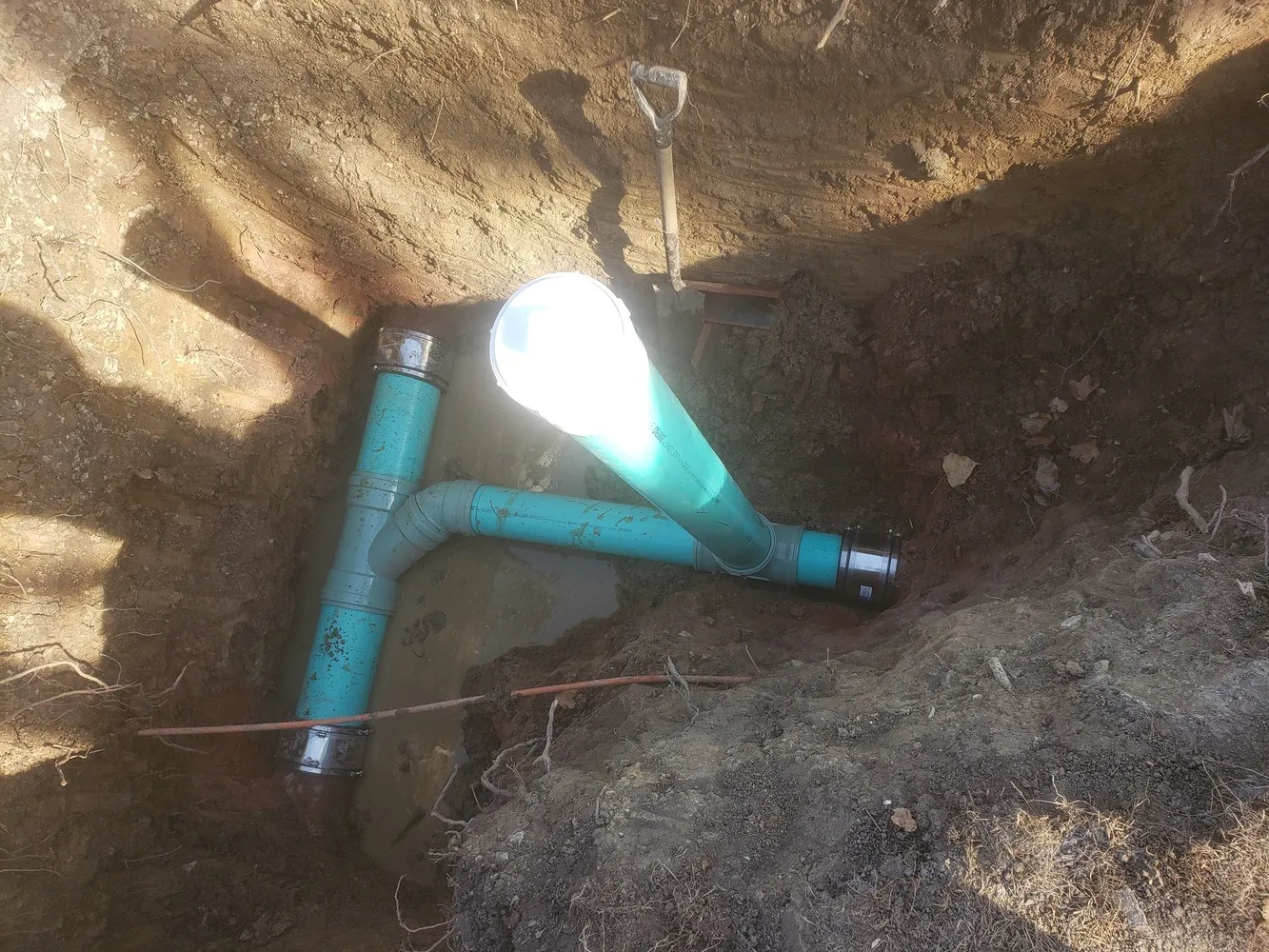
Traditional sewer repair meant trenching the full length of a damaged line — tearing up landscaping, driveways, even sidewalks. Trenchless methods, like cured-in-place pipe lining, avoid most of that. A resin-saturated liner is fed into the existing damaged pipe, inflated against the inner walls, and left to cure until it hardens into a smooth, jointless pipe inside the old one.
The result is essentially a brand-new pipe within a pipe, often rated to last several decades on its own, with access typically needed only through a single existing cleanout or small access point rather than the entire pipe run.
A cured liner typically reduces a pipe's inner diameter by less than a quarter inch — barely noticeable to flow capacity.Why Buffalo Grove Residents Count on Us

Experienced Staff

Proven
Track

Client
Oriented

Proven Track Record

![[company_name], [city], [postcode]](https://buffalosewerrodding.com/wp-content/uploads/2025/06/16f7ecd3c0d94c4f85b3dfa90b2b5d14.webp)